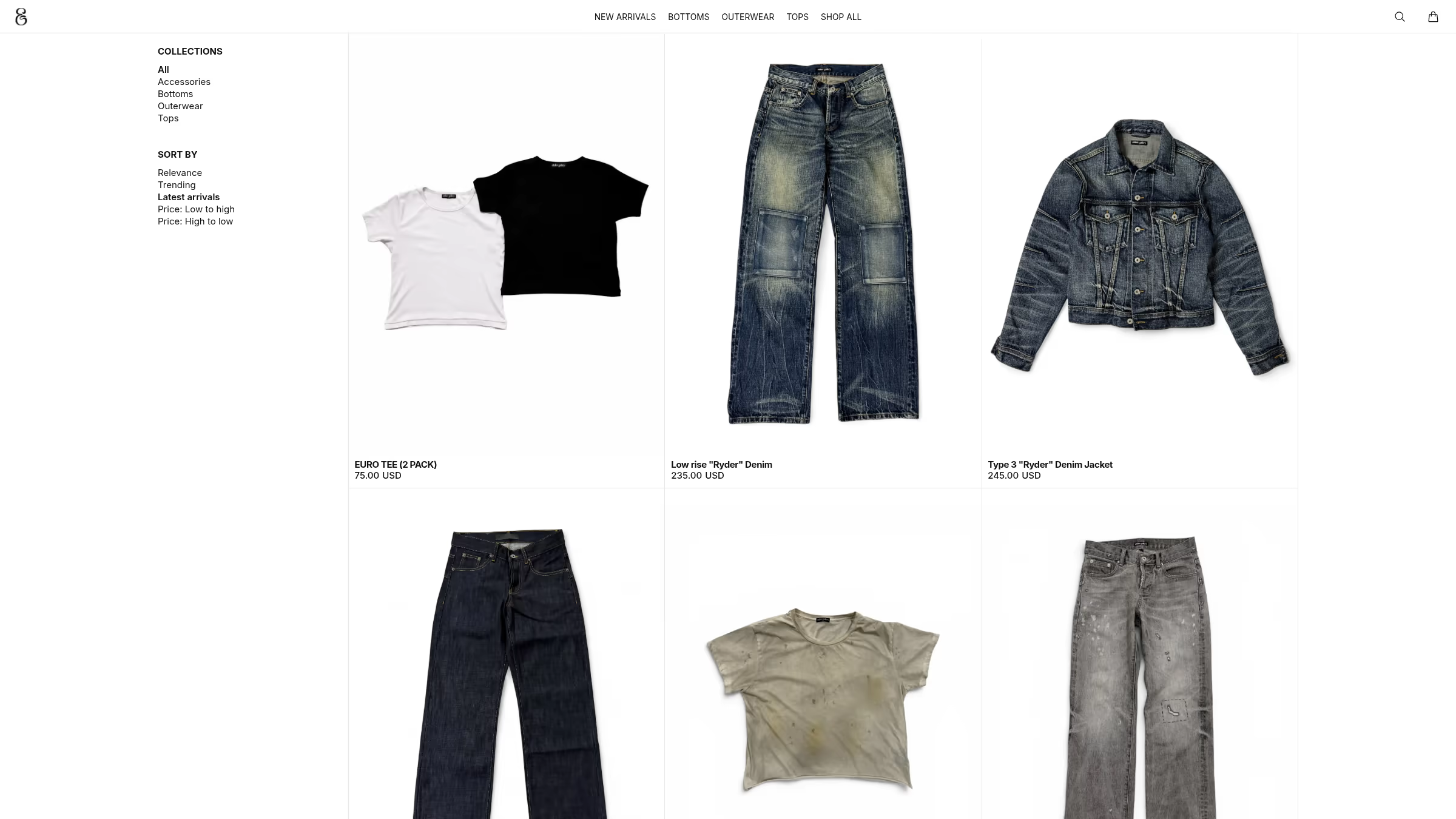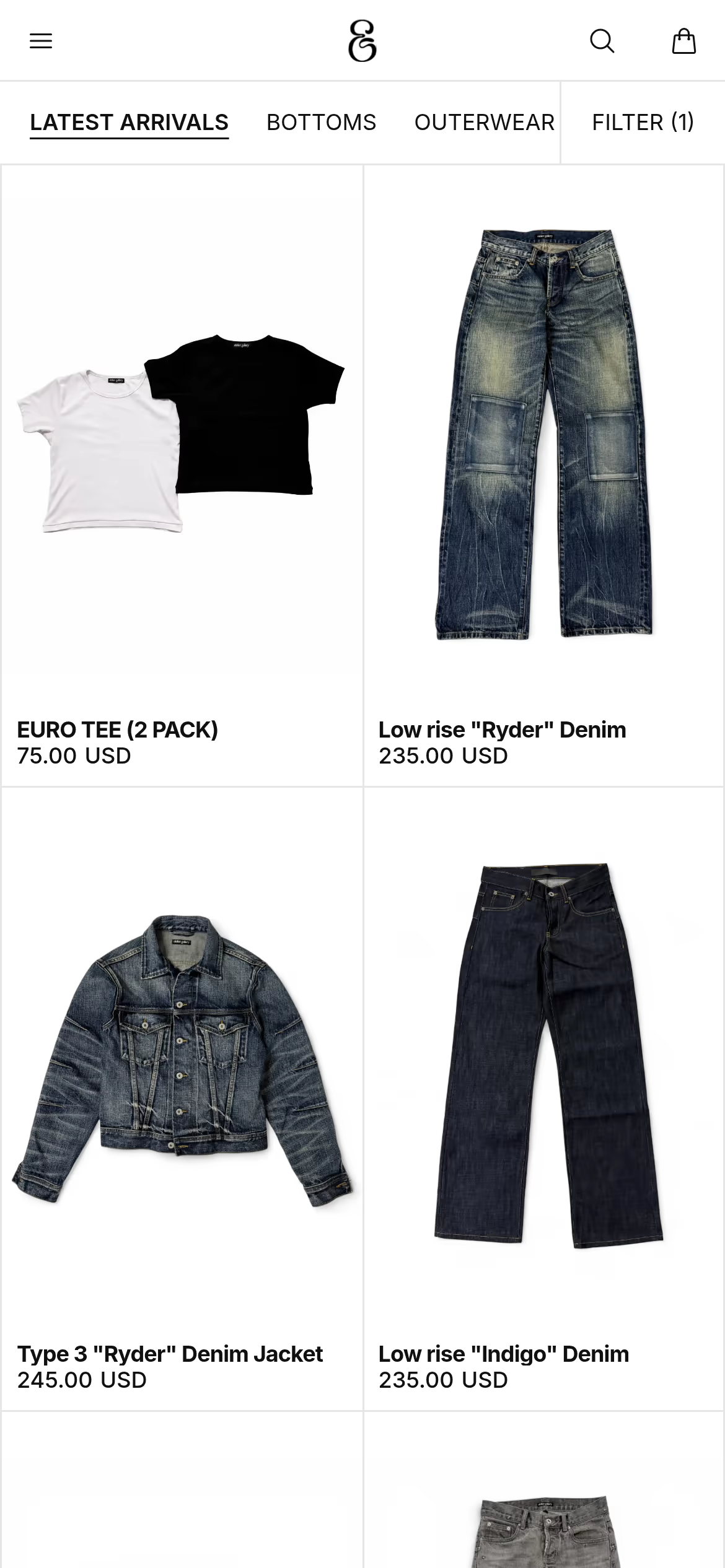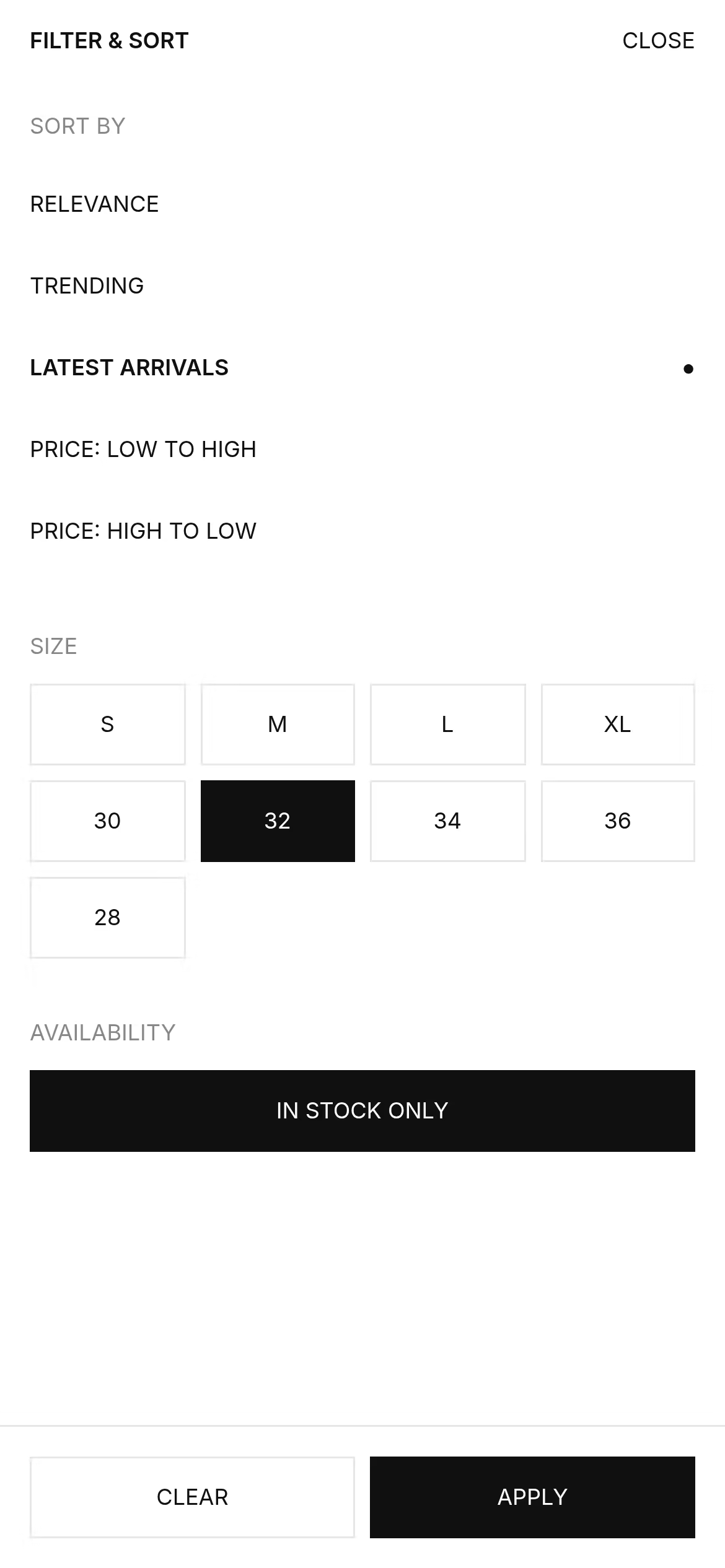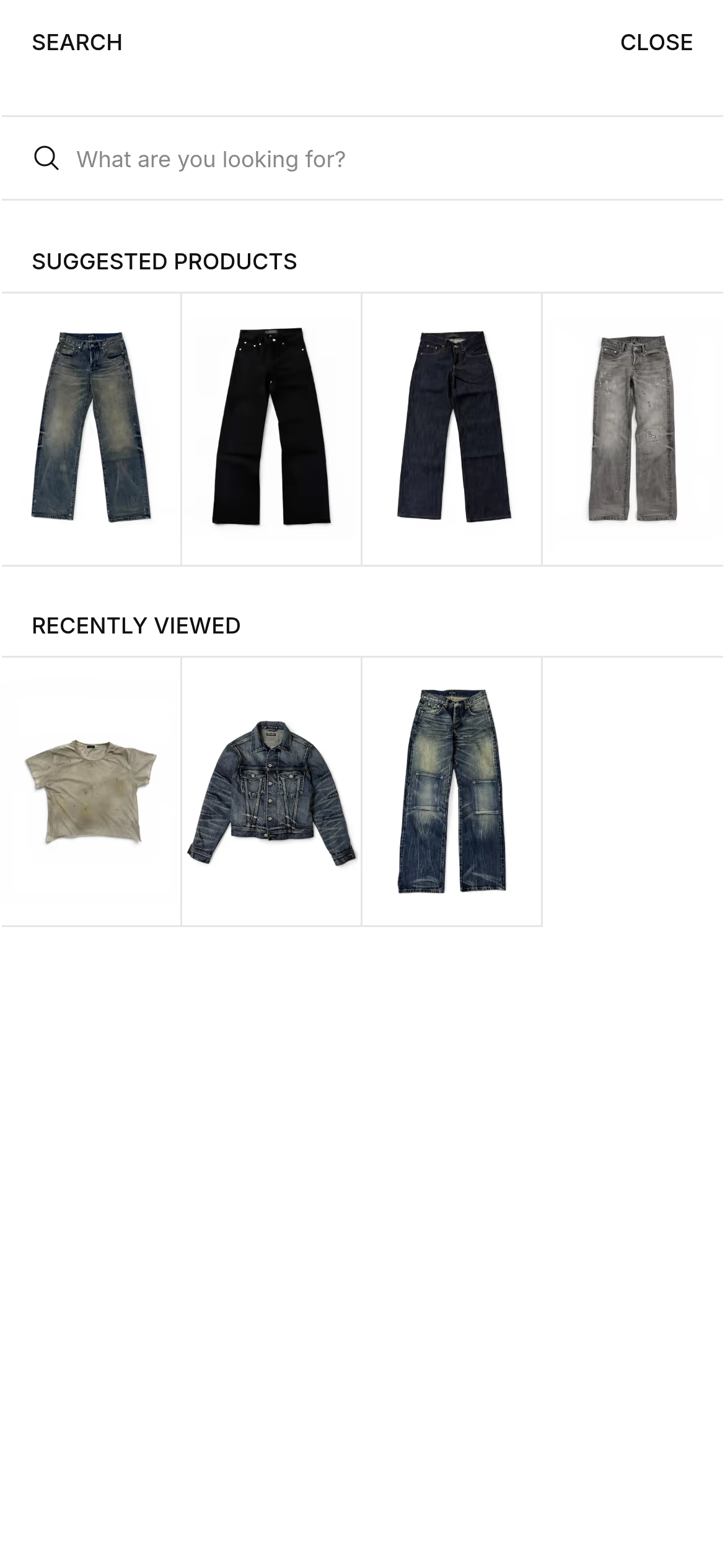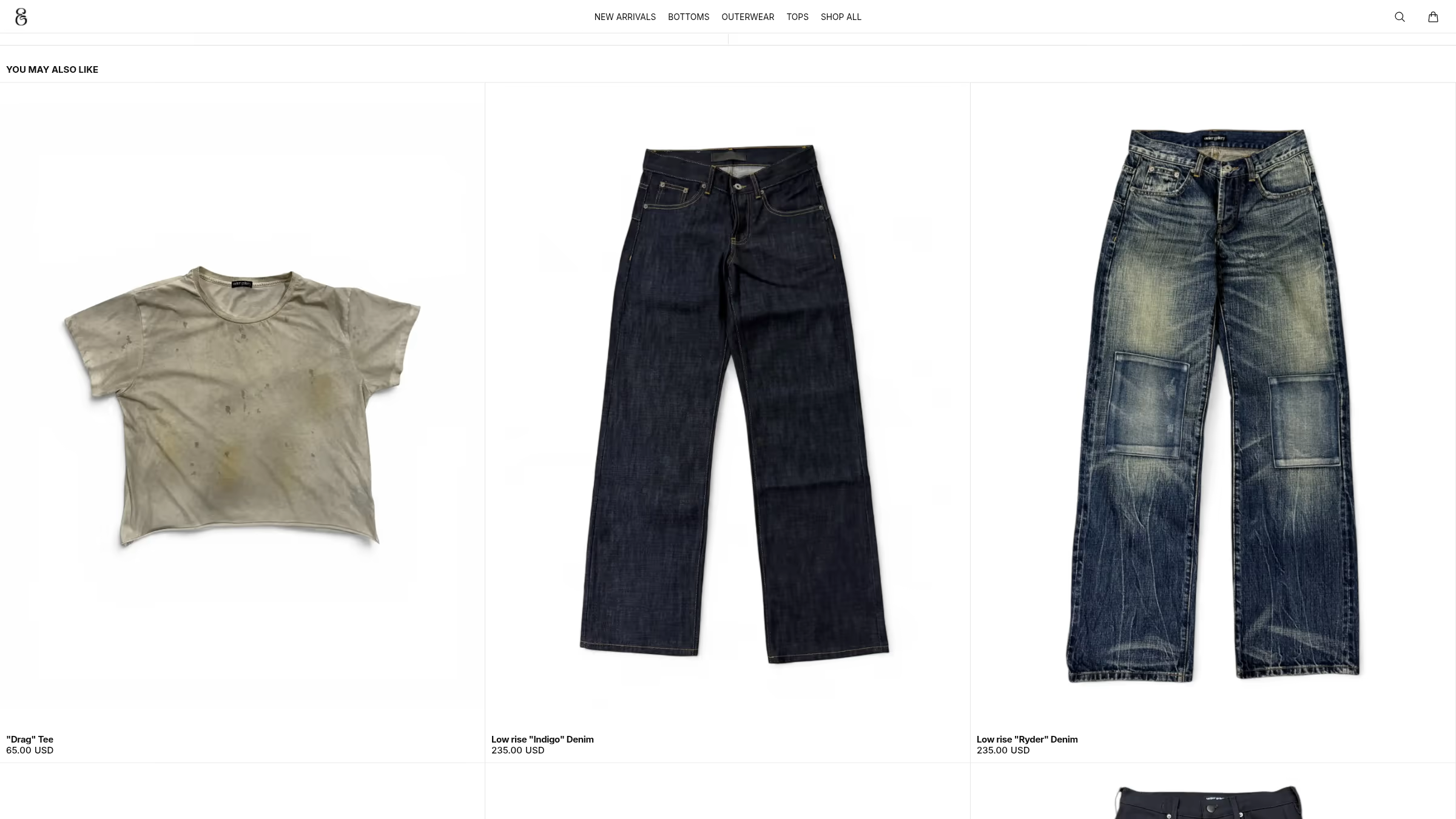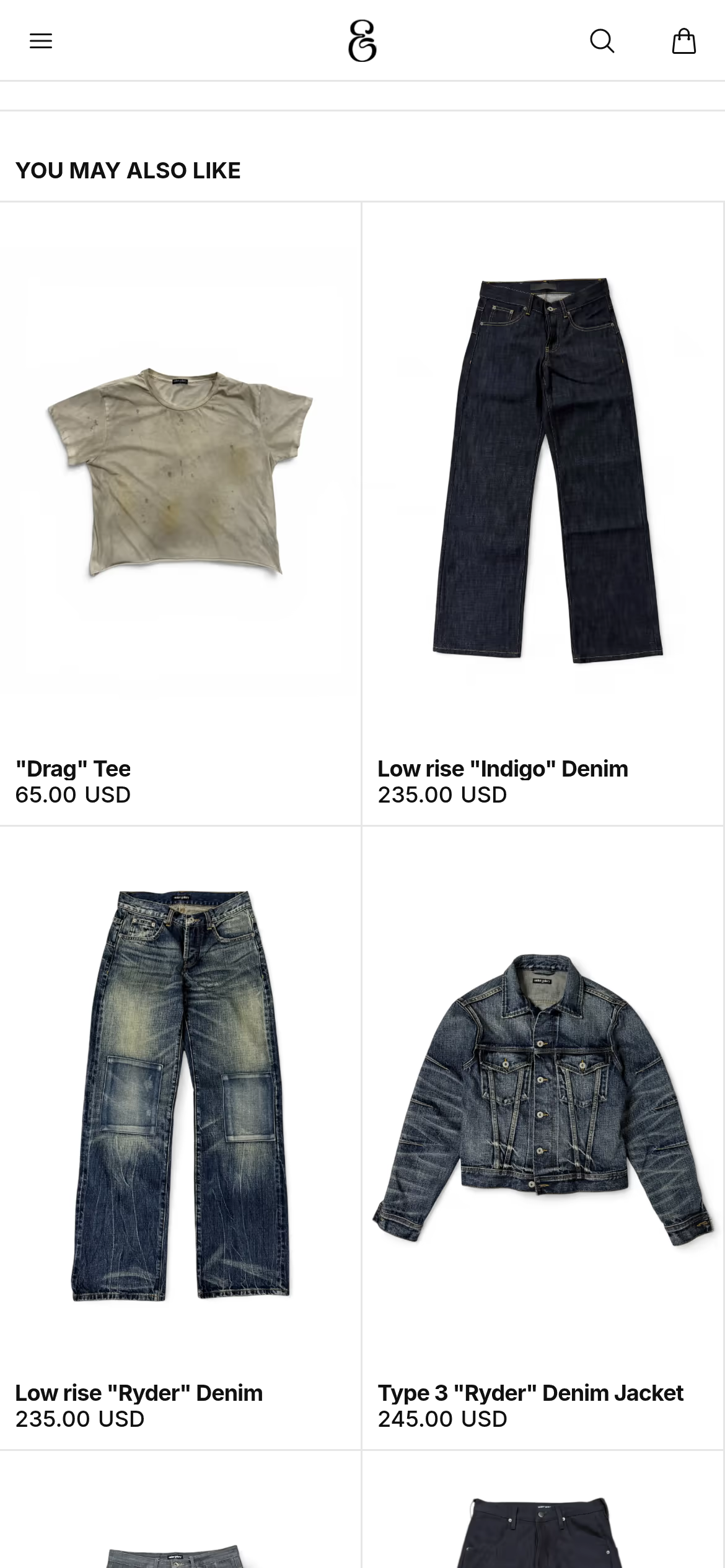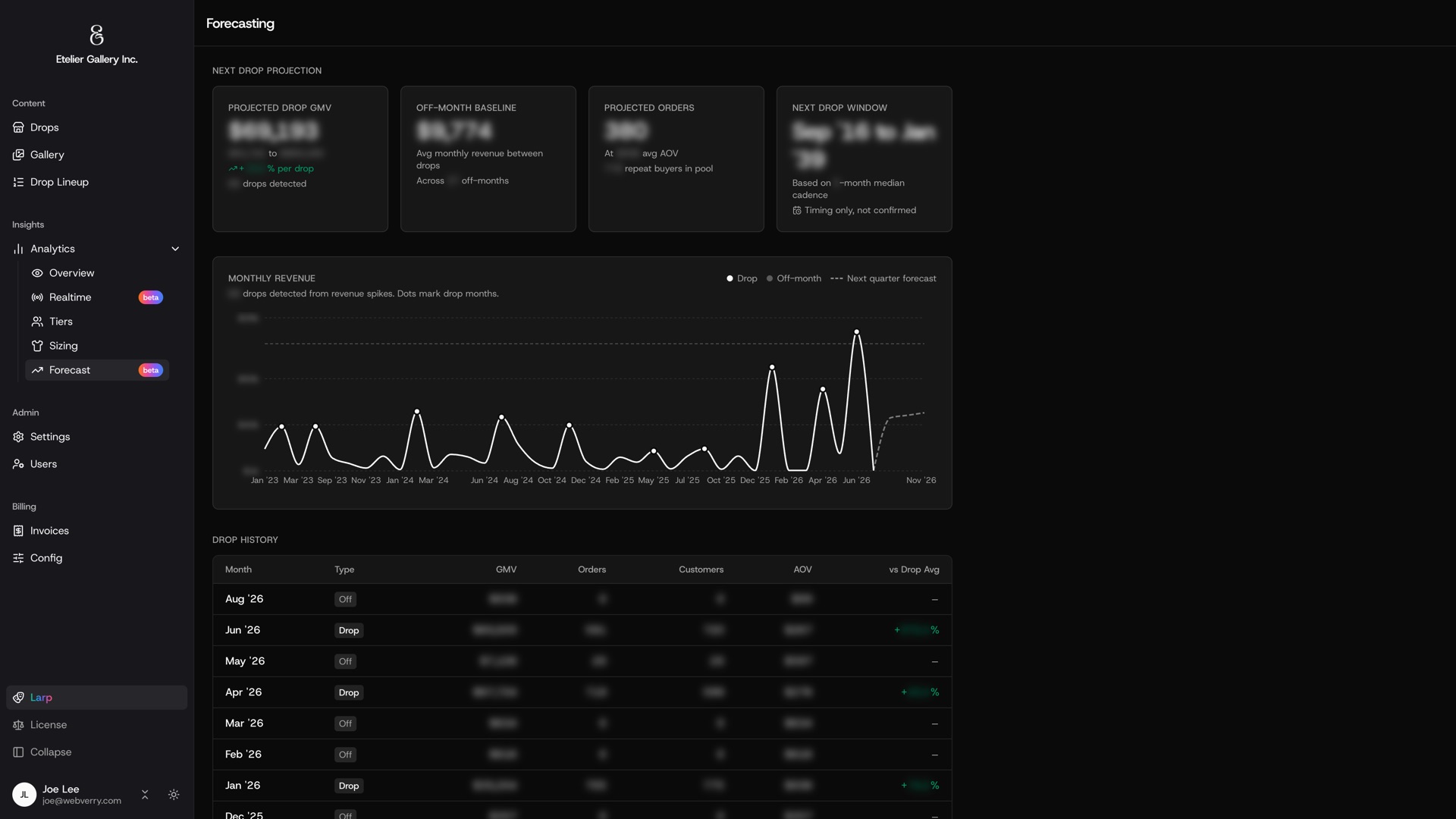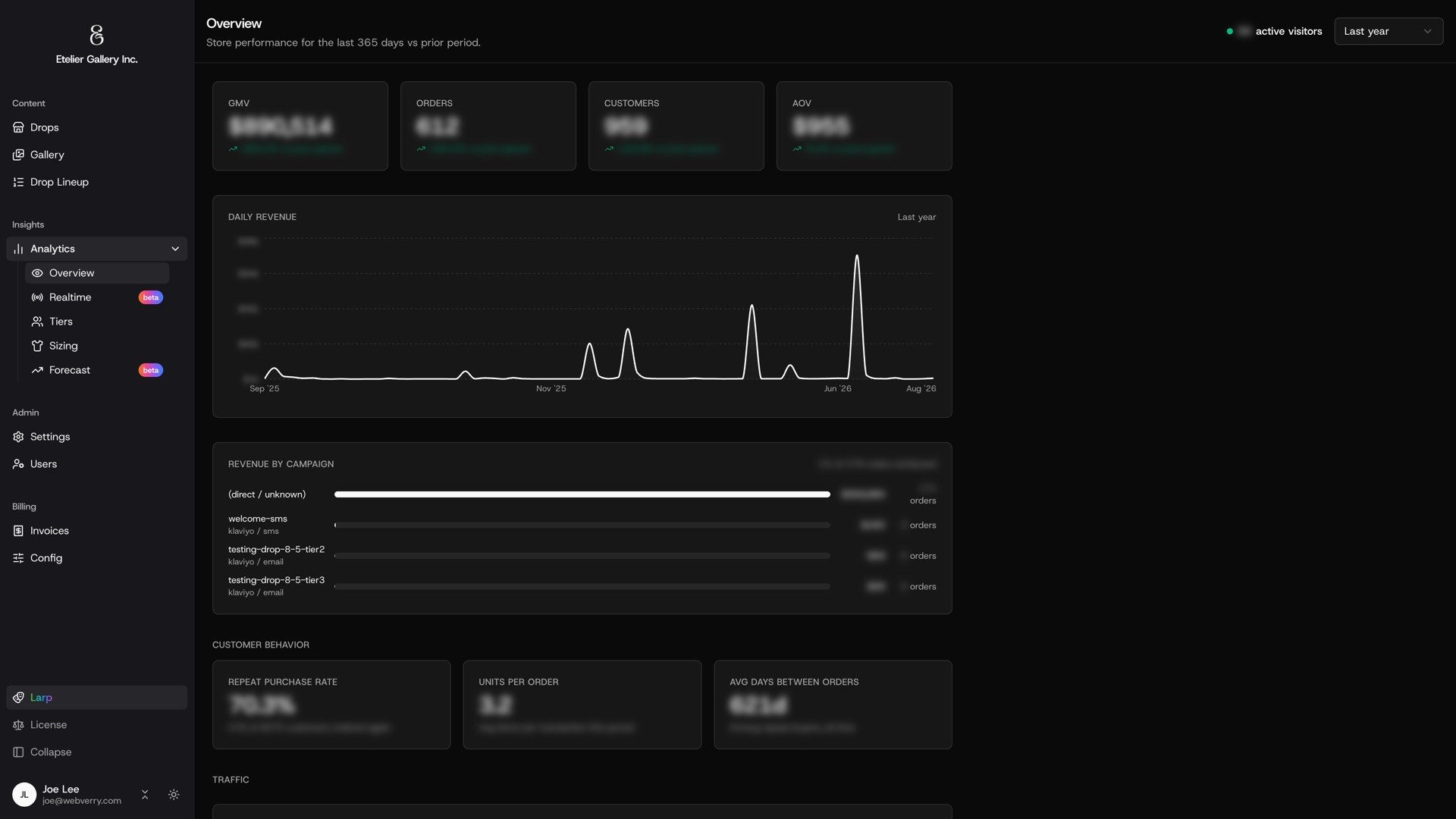
Scarcity infrastructure for a luxury streetwear label. Etelier Gallery runs on drop-based commerce: no permanent storefront, scheduled access windows, and a tiered SMS system that sent early access to the inner circle first — driving 31% list conversion per drop. The storefront defaults to locked on any error condition. The brand's exclusivity is a property of the code, not an act of vigilance.
Etelier Gallery runs on a single operating principle: the drop is law. No permanent inventory. No evergreen listing. Each release opens to a defined window and closes with the same finality. The brand's value isn't in the clothes. It's in the structure around them.
That structure only holds if the system holds. A luxury streetwear customer who misses a window because someone forgot to close it doesn't just lose a purchase. They lose trust in the mechanism that made the brand feel exclusive in the first place. When we first engaged, that mechanism was two people watching a shared calendar and executing steps manually on every drop.
That was the actual infrastructure for a brand built entirely on precision.
OPERATIONAL COMPARISON
2 OPERATORS ON-CALL
Every drop, watching a clock
SCHEDULE IN DASHBOARD
Once per drop, set and forget
MANUAL LOCK / UNLOCK
Error-prone, requires vigilance
EDGE ENFORCES ACCESS
Zero-touch tokenized middleware
MANUAL SMS CAMPAIGNS
Configured by hand every drop
AUTO TIER-BASED SMS
Inner circle → returning → community
NO LAUNCH STRUCTURE
Chaos on drop day
CRON ADVANCES STATE
Every 5 minutes, no intervention
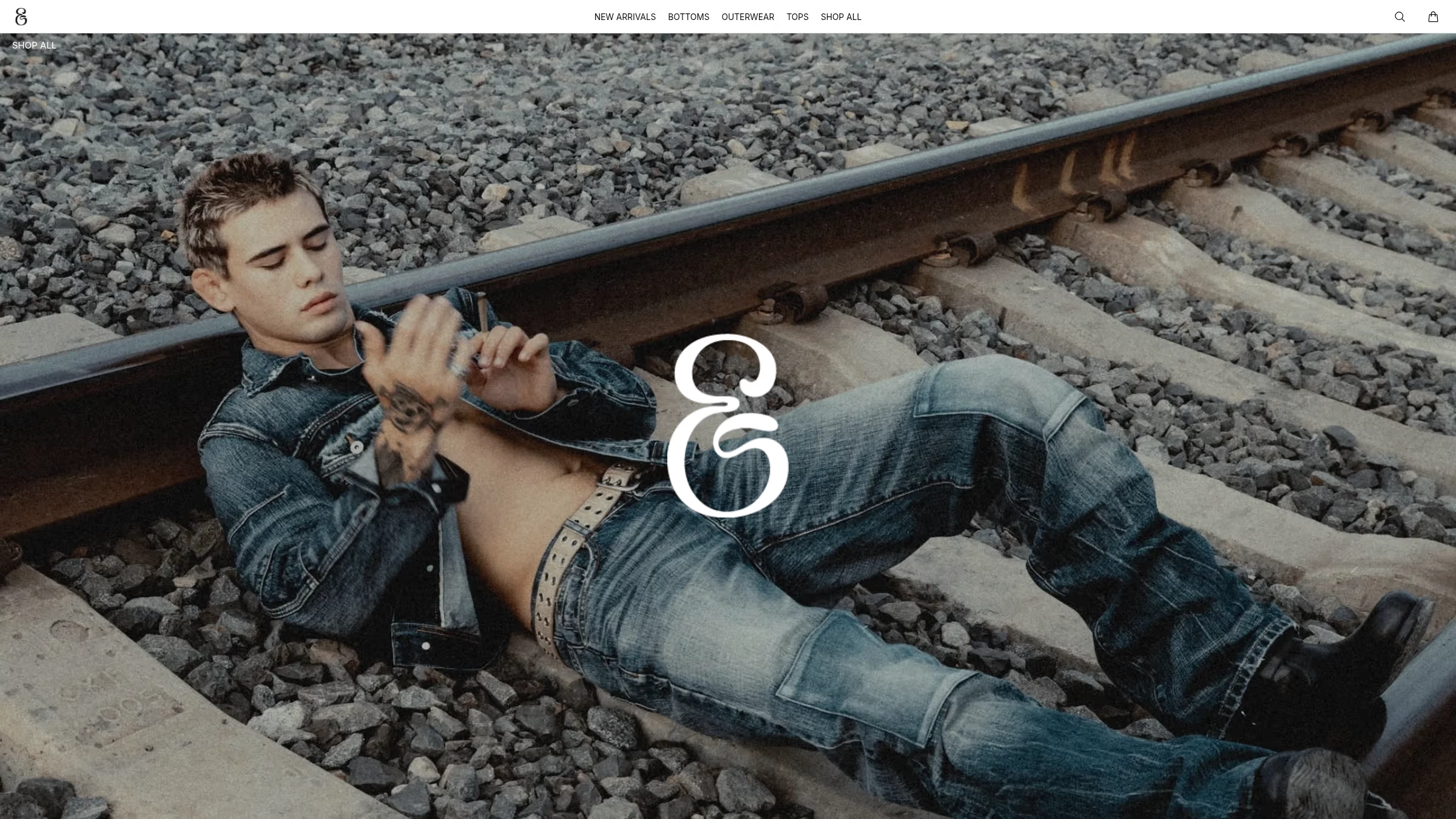
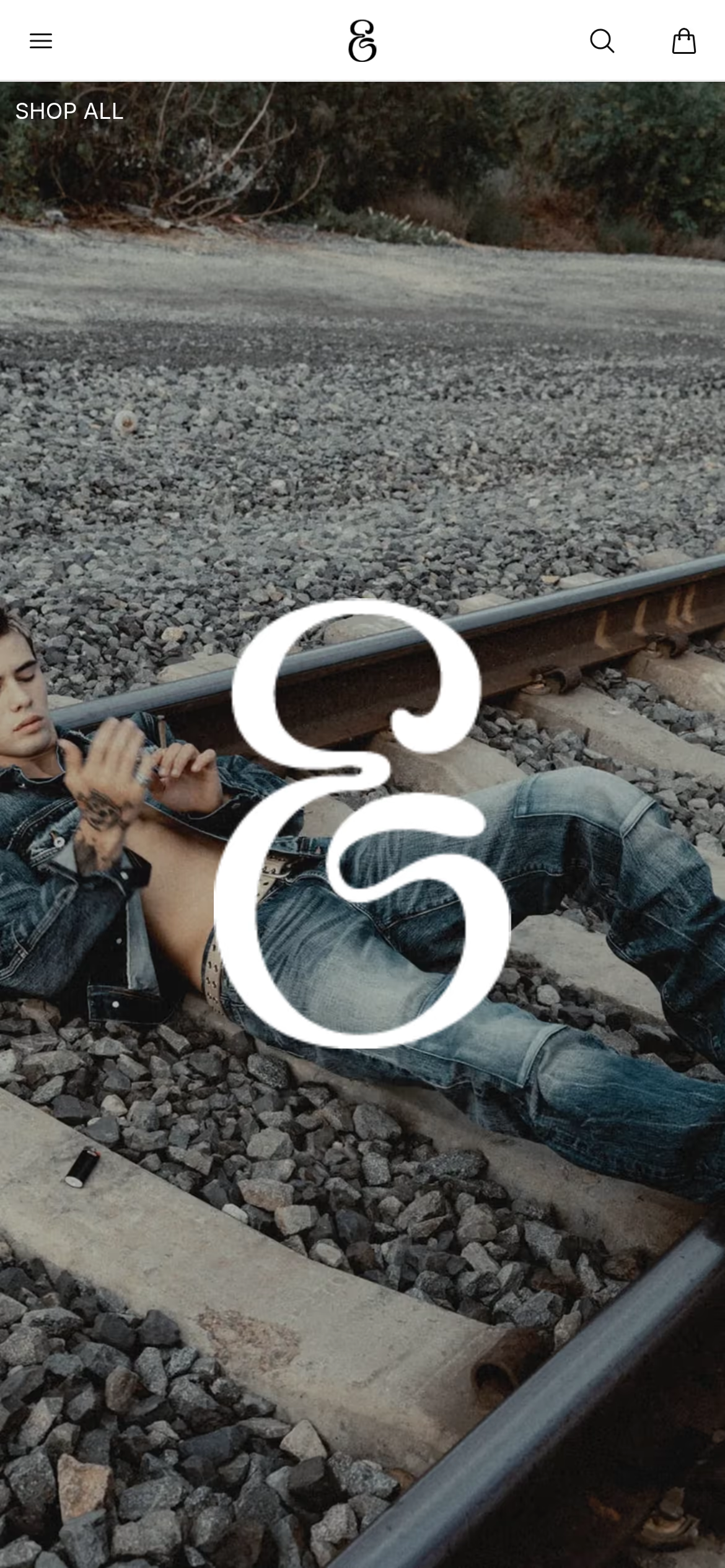
Every visitor arrives at a closed store. They don't know if they're on the list. They don't know how long the wait will be. For thirty seconds, sometimes longer, this screen is the entire brand experience.
4,000 particles sampled from the logo's geometry, rendered in the brand's own initials. Approach the logo and the particles physically scatter, then slowly return. The physics are tuned to feel like the brand itself: deliberate, unhurried, and slightly resistant to intrusion.
The unlock screen isn't decoration. It's doing brand work while customers queue.

Before the rebuild, a drop required a checklist and two operators on call. Someone configured the SMS tool. Someone else watched the clock and manually unlocked the store at the right moment. If either step drifted by an hour or a missed notification, the signal degraded. The brand's scarcity became a product of vigilance rather than infrastructure.
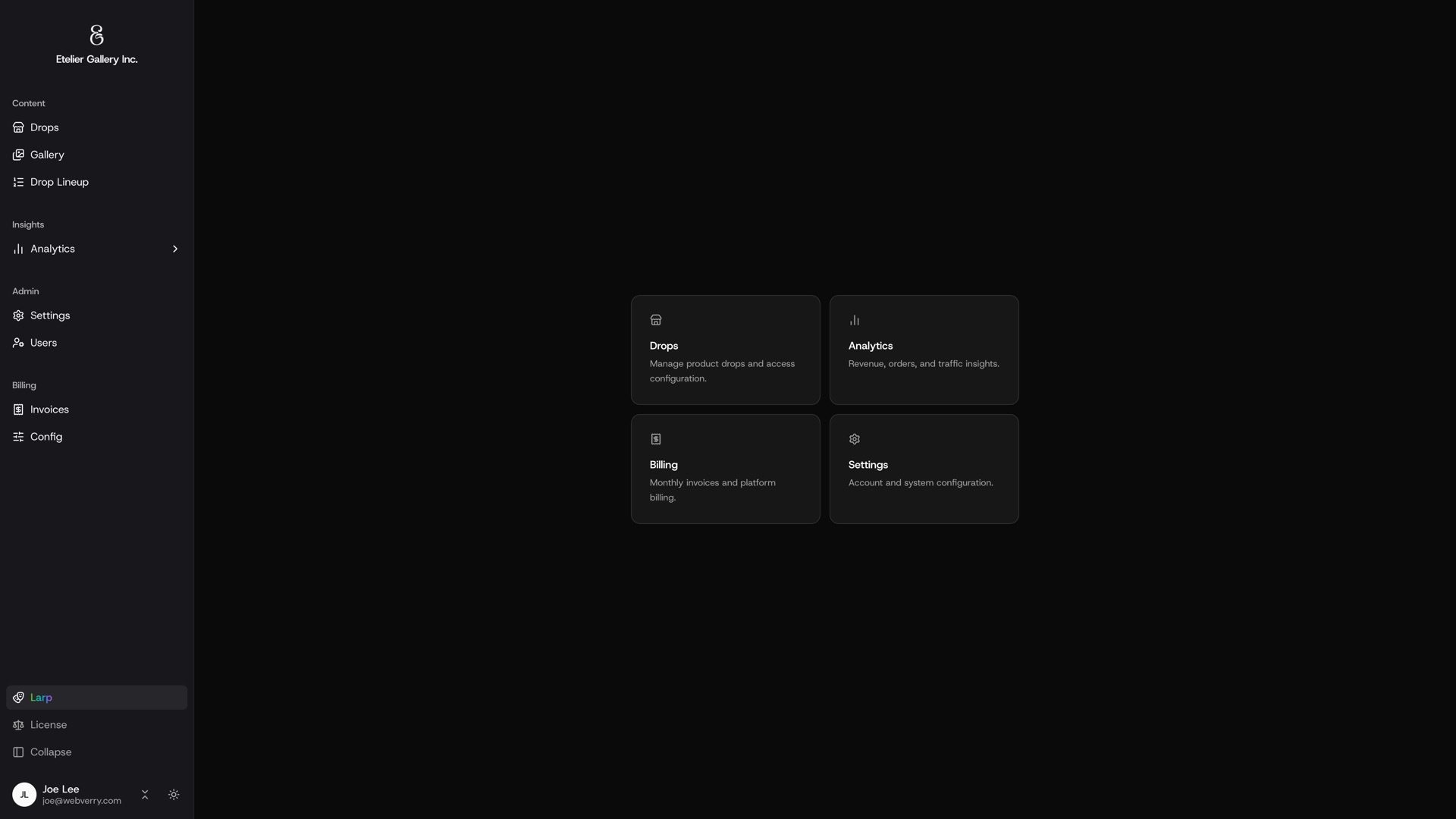
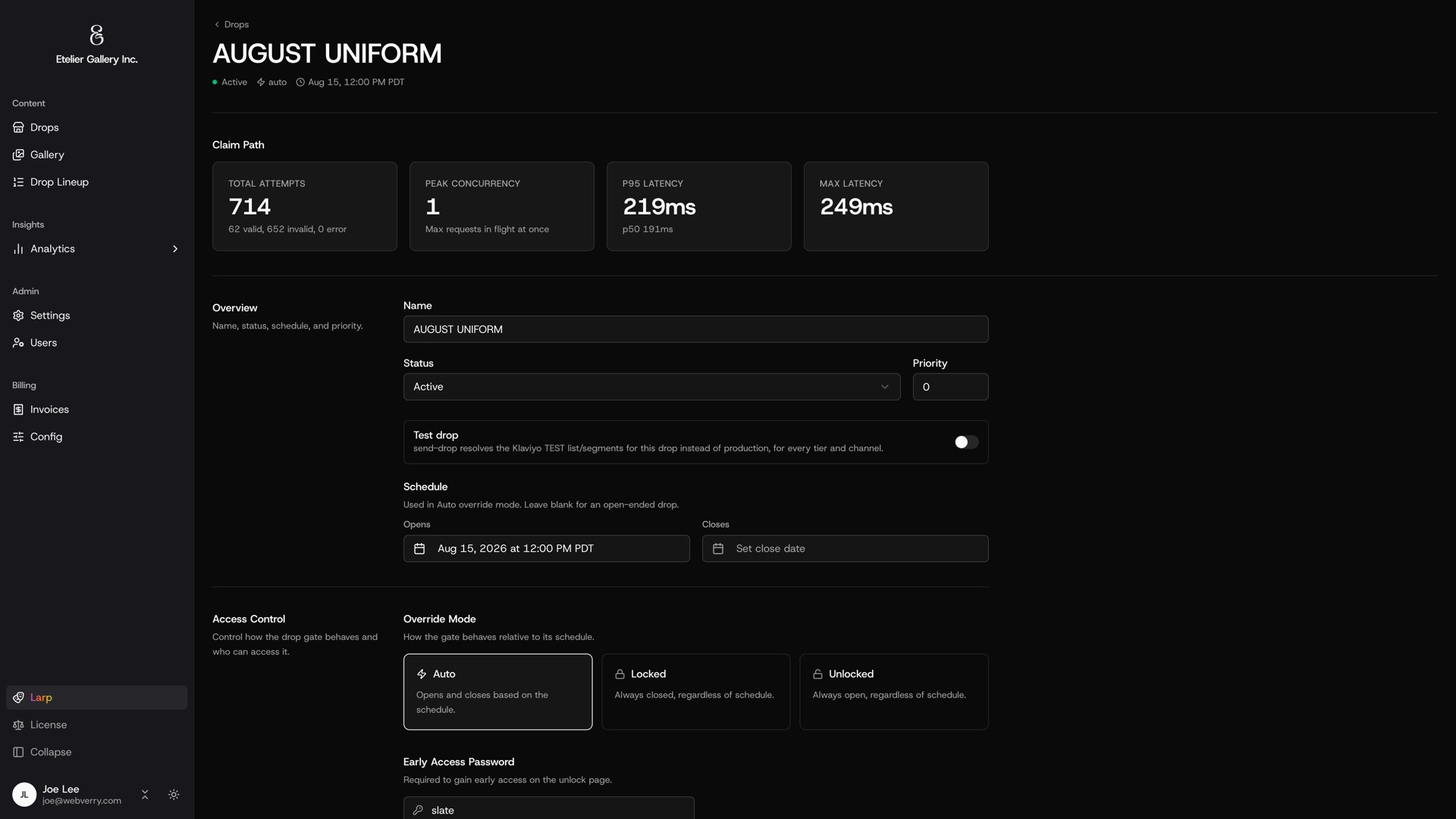
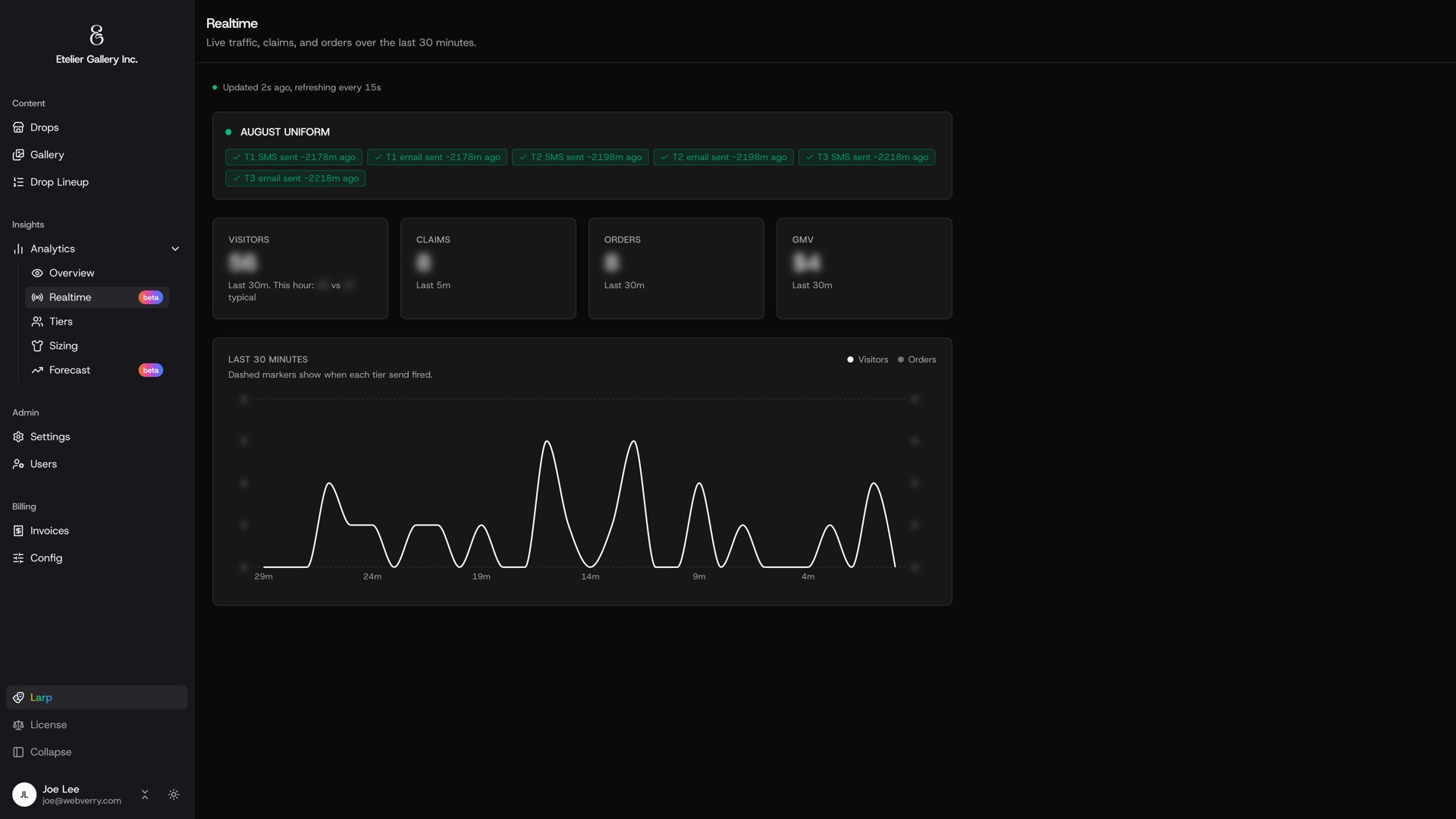
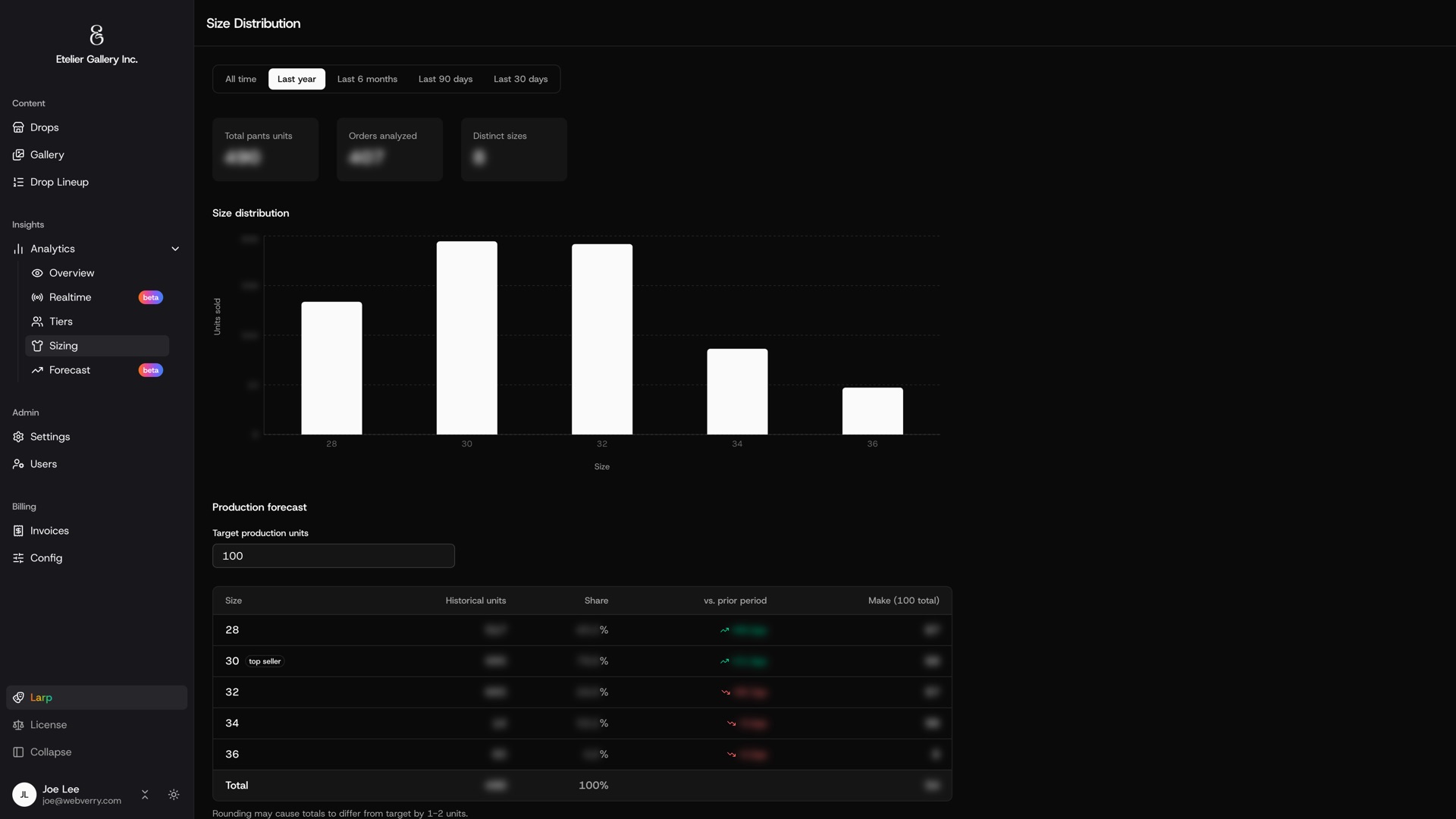
The rebuild inverted the dependency. A drop is now a record in the CMS: start time, end time, password, priority tier. The operator configures it once and doesn't touch it again. A cron job running every five minutes reads the schedule and advances state. Edge middleware intercepts every request and enforces access before any page loads.
The critical decision was the default state. On any error condition (failed API call, network issue, unexpected state) the system locks. There is no code path that leaves the store open when the window is closed. Scarcity became a property of the code.
SYSTEM GUARANTEE
Default failure mode
The system locks on any error condition. There is no code path that leaves the store open when the window is closed.
Scarcity enforced by the infrastructure, not an act of vigilance
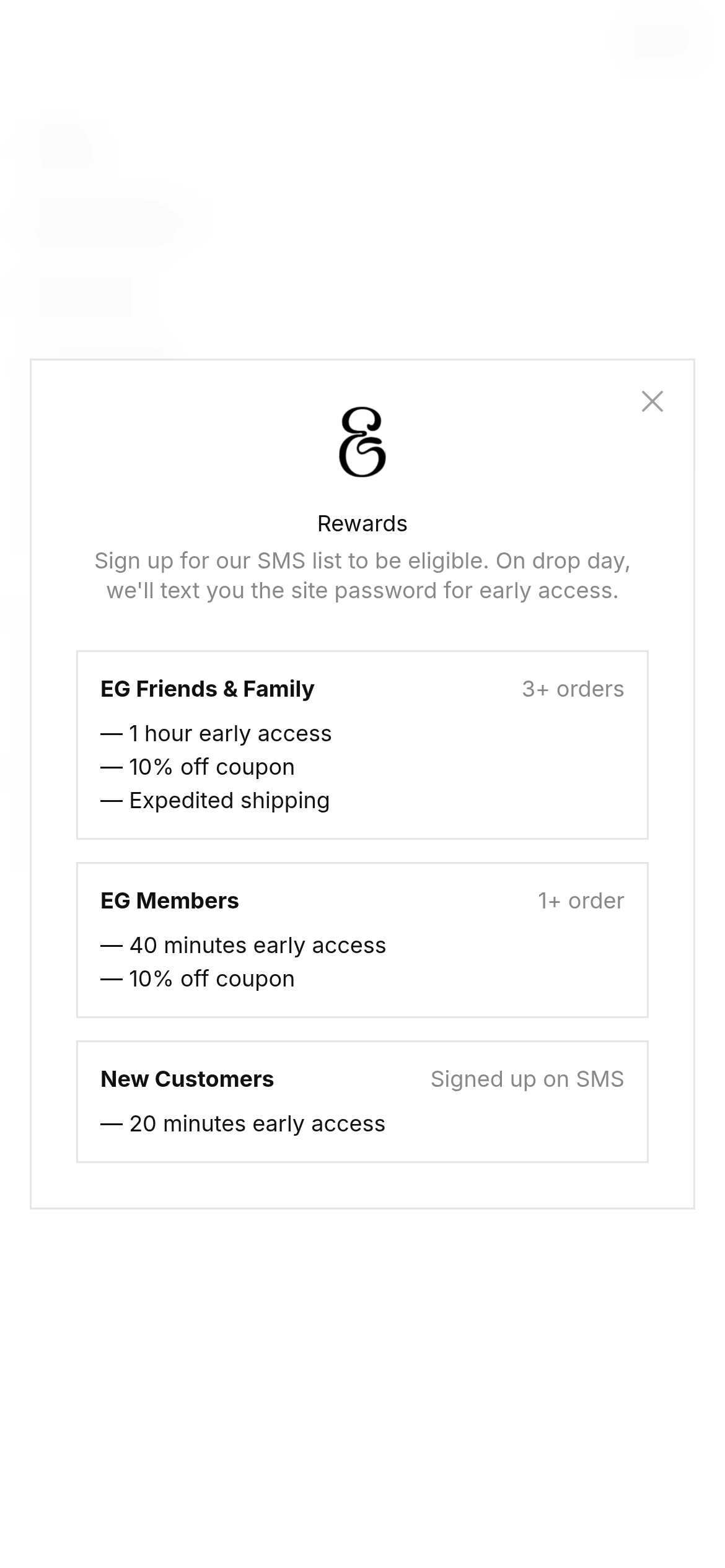
The insight behind the tier system is simple: not all customers are equal to the brand, and the brand should reflect that. Inner circle customers with three or more orders get access forty minutes before anyone else. Returning buyers get twenty. The broader list gets in at open.
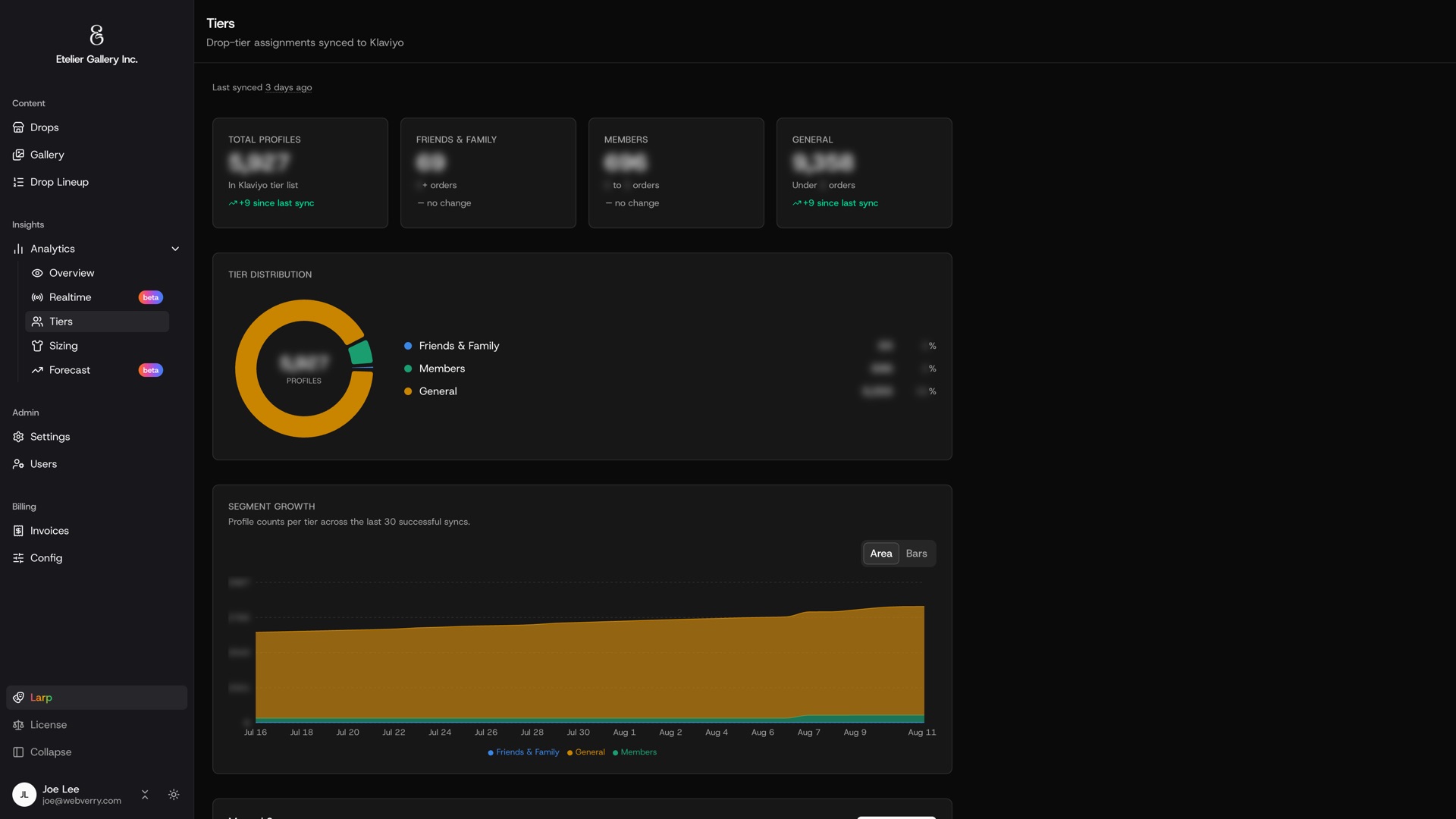
What makes this work isn't the SMS. It's the recognition. Inner circle customers aren't just getting early access. They know the system sees them. That feeling drives loyalty in a way that no discount program does. The tiers aren't configured manually — the system queries Shopify order history on each cycle and assigns status automatically. The brand never touches a list. 31% of the SMS list converts per drop.
TIER STRUCTURE
INNER CIRCLE
3+ ORDERS
ACCESS WINDOW
T–40M
RETURNING
1–2 ORDERS
ACCESS WINDOW
T–20M
COMMUNITY
SUBSCRIBER · NO PURCHASE
ACCESS WINDOW
T–0
SMS LIST CONVERSION
CR
31%
"TIER ASSIGNED AUTOMATICALLY VIA SHOPIFY ORDER HISTORY"
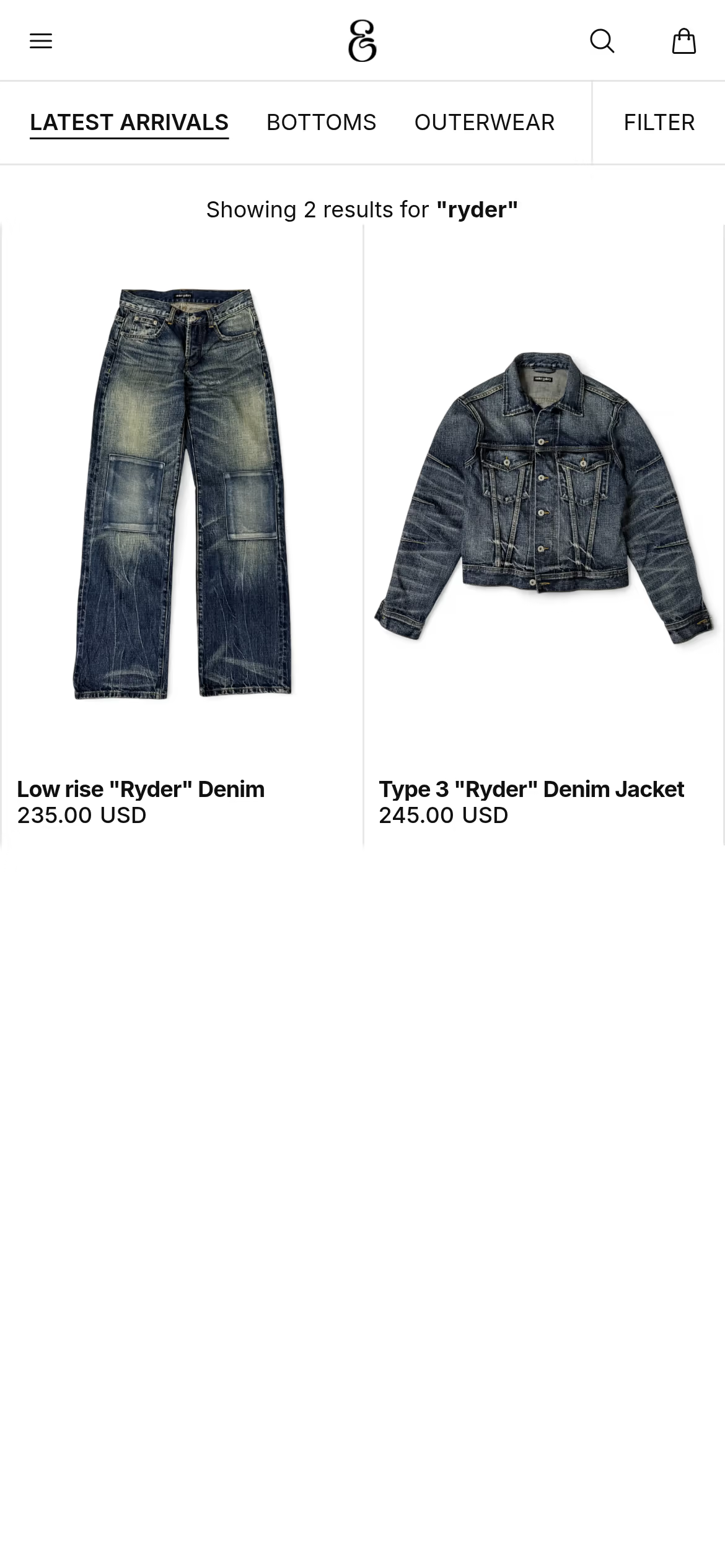
A brand like Etelier can't live inside a Shopify theme. The unlock screen can't be built in a theme editor. The drop engine can't be configured in the dashboard. The tier logic can't run inside a standard checkout flow. The moment the customer experience becomes load-bearing, when how it feels is inseparable from what it is, the constraints of the theme layer become the ceiling.
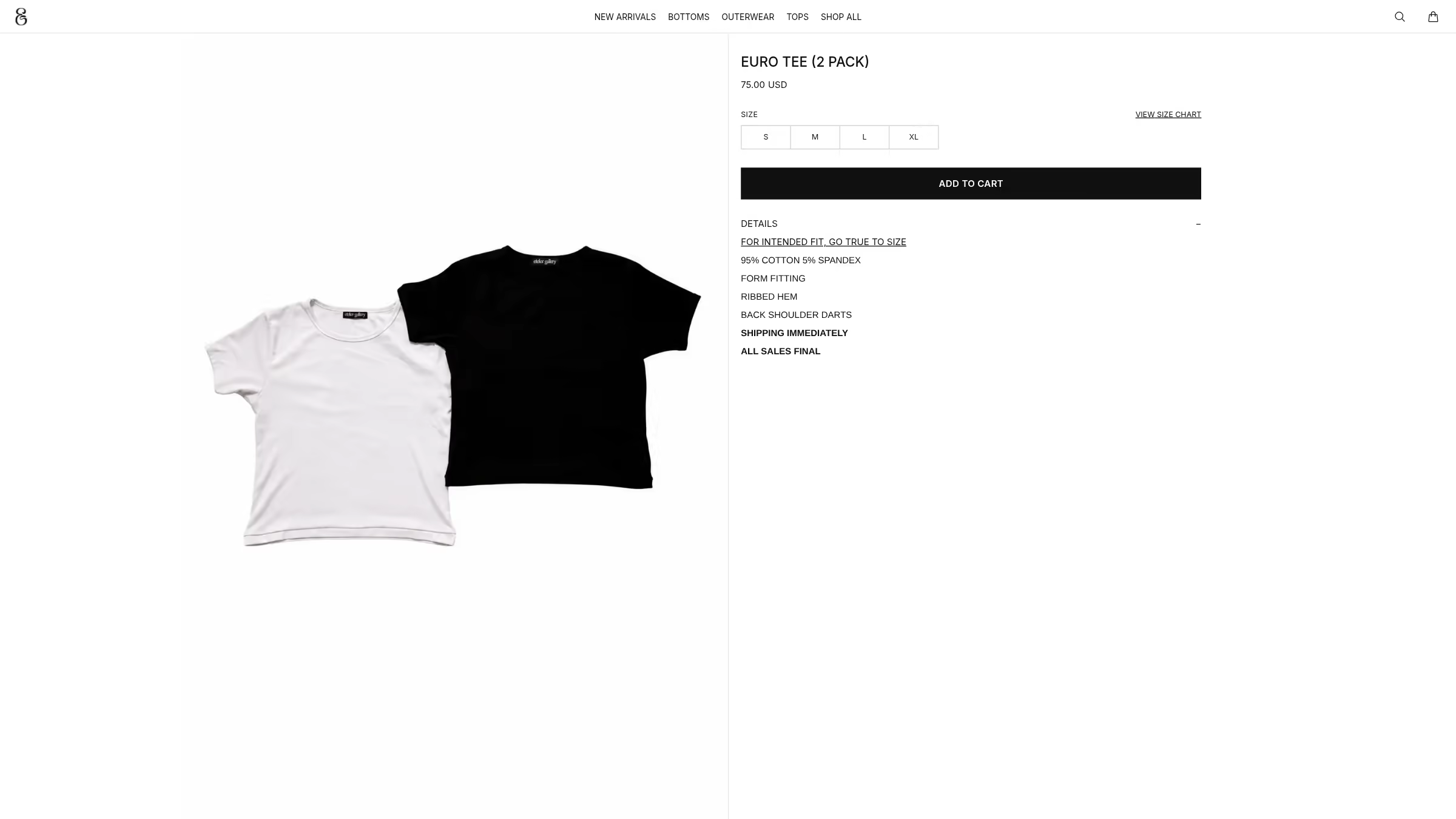
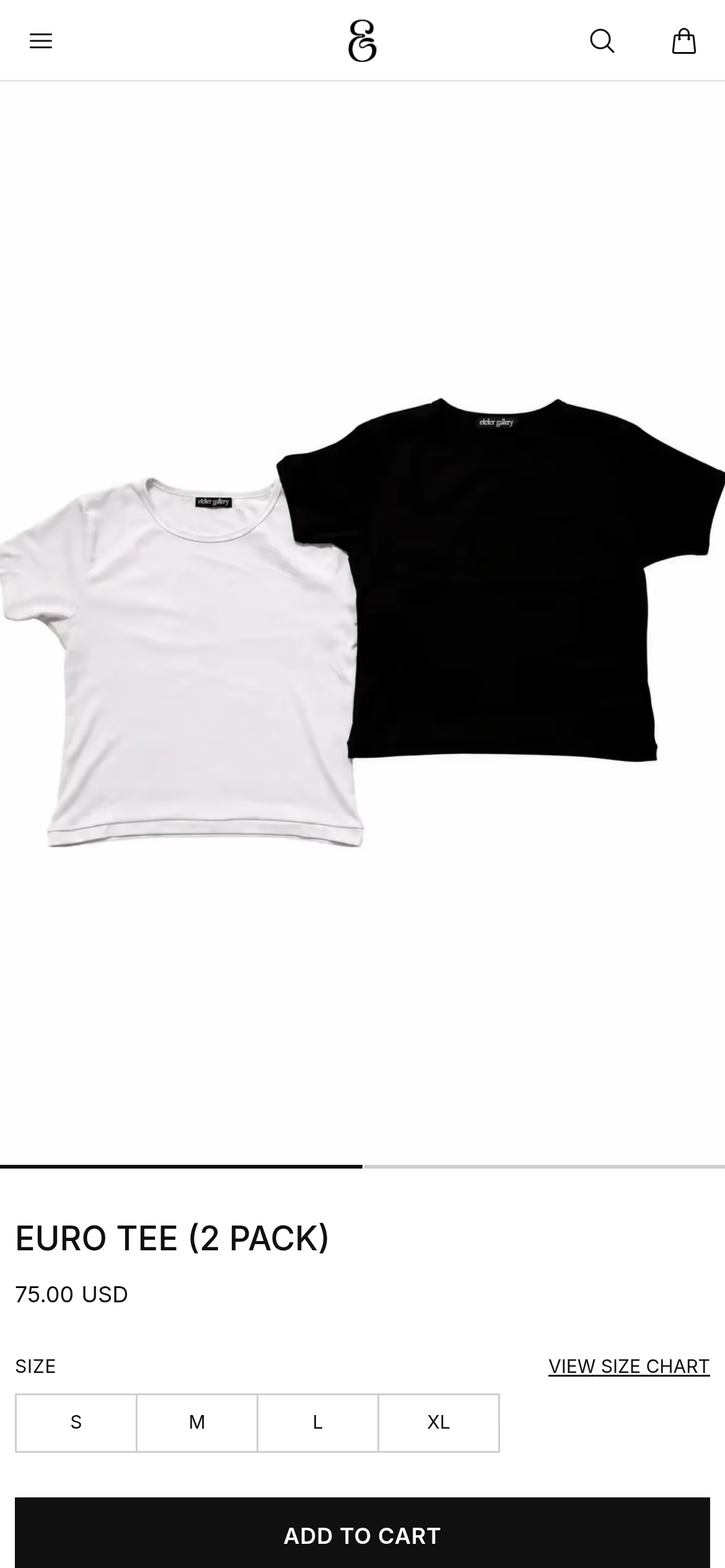
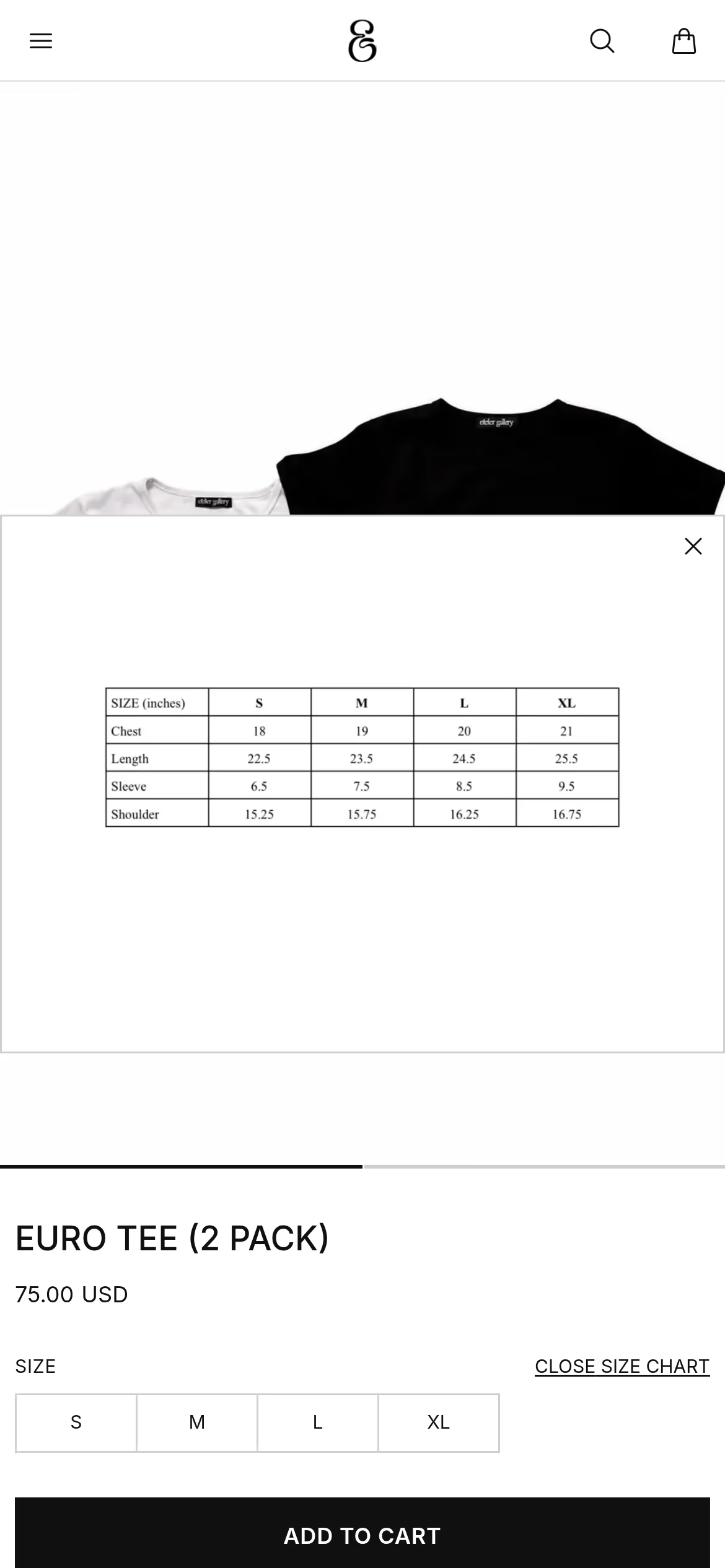
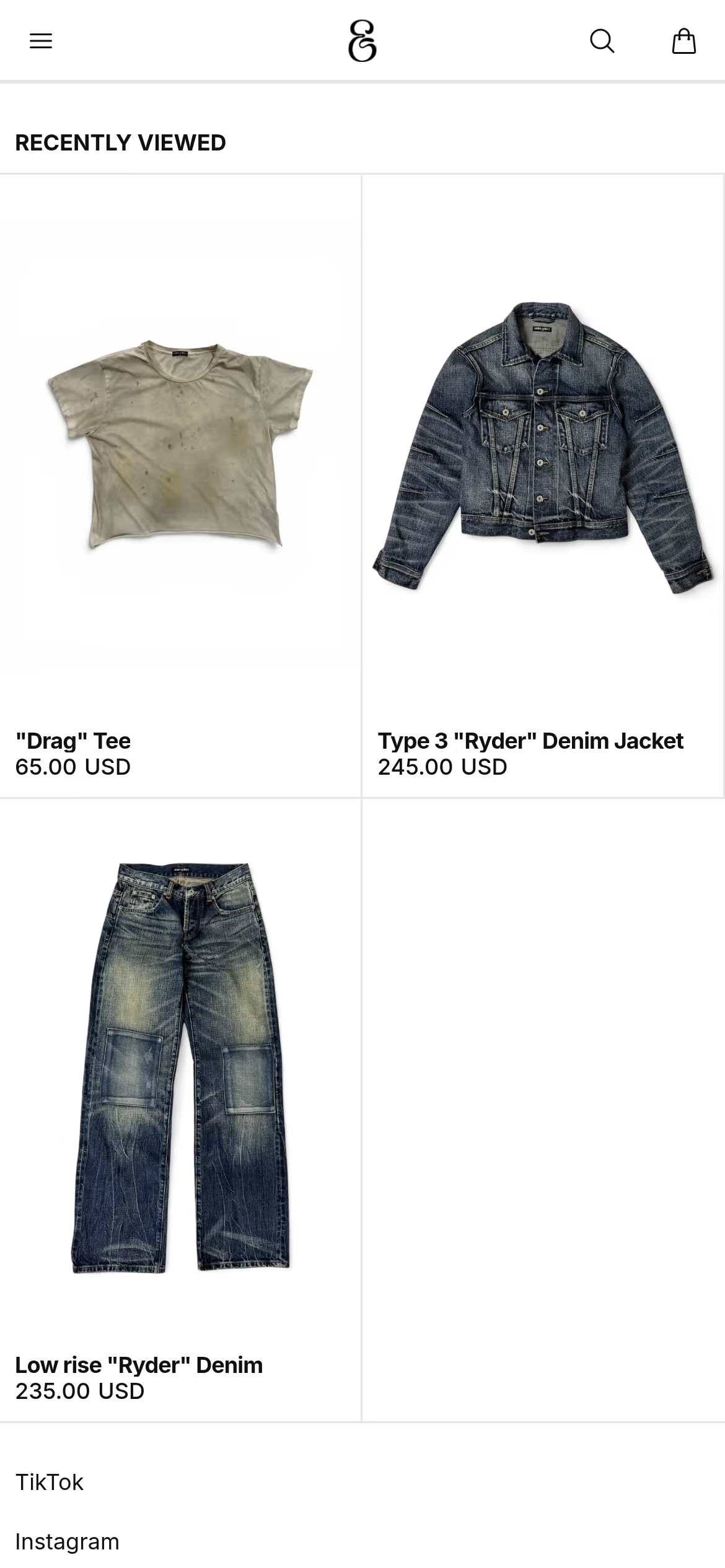
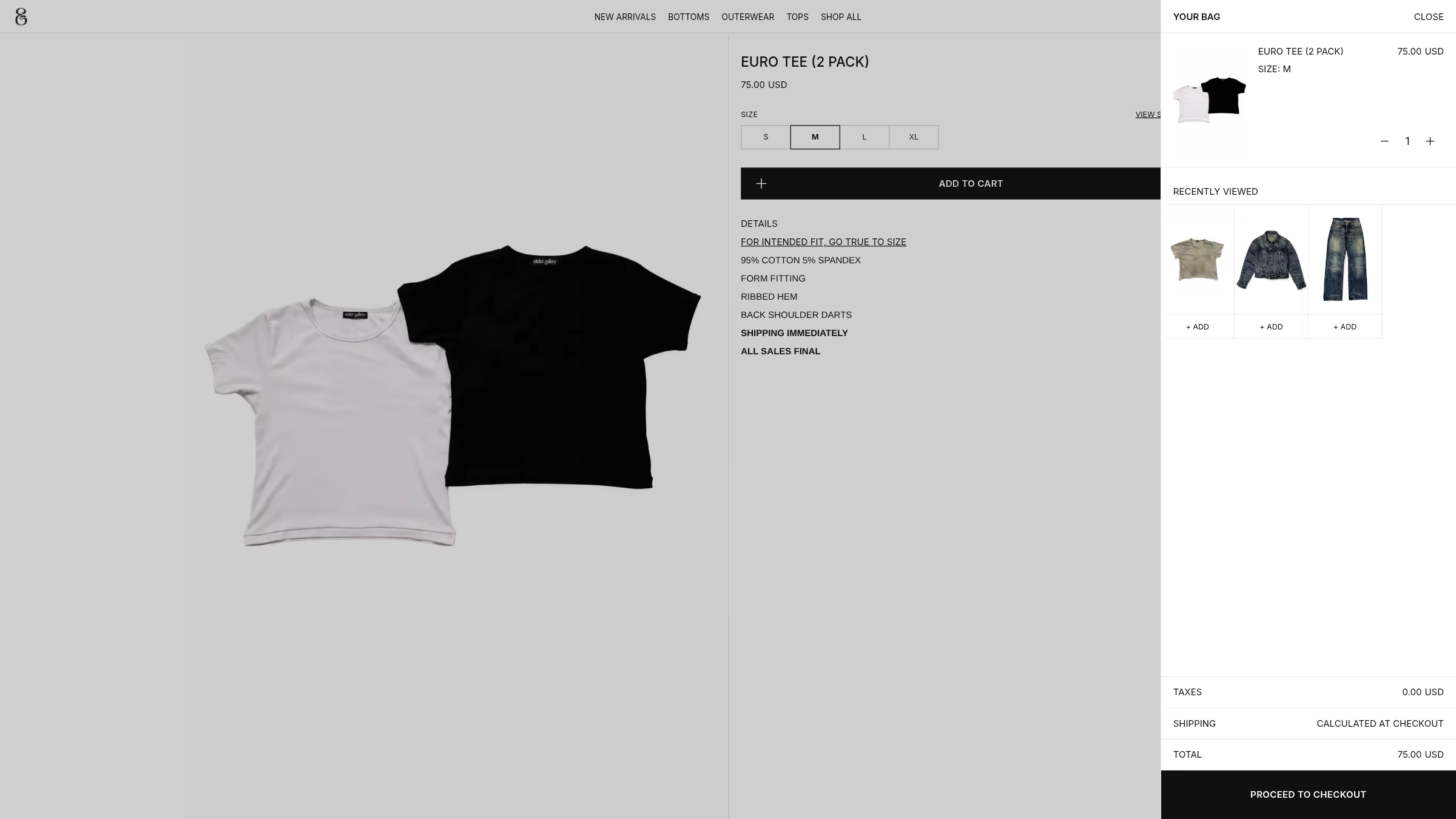
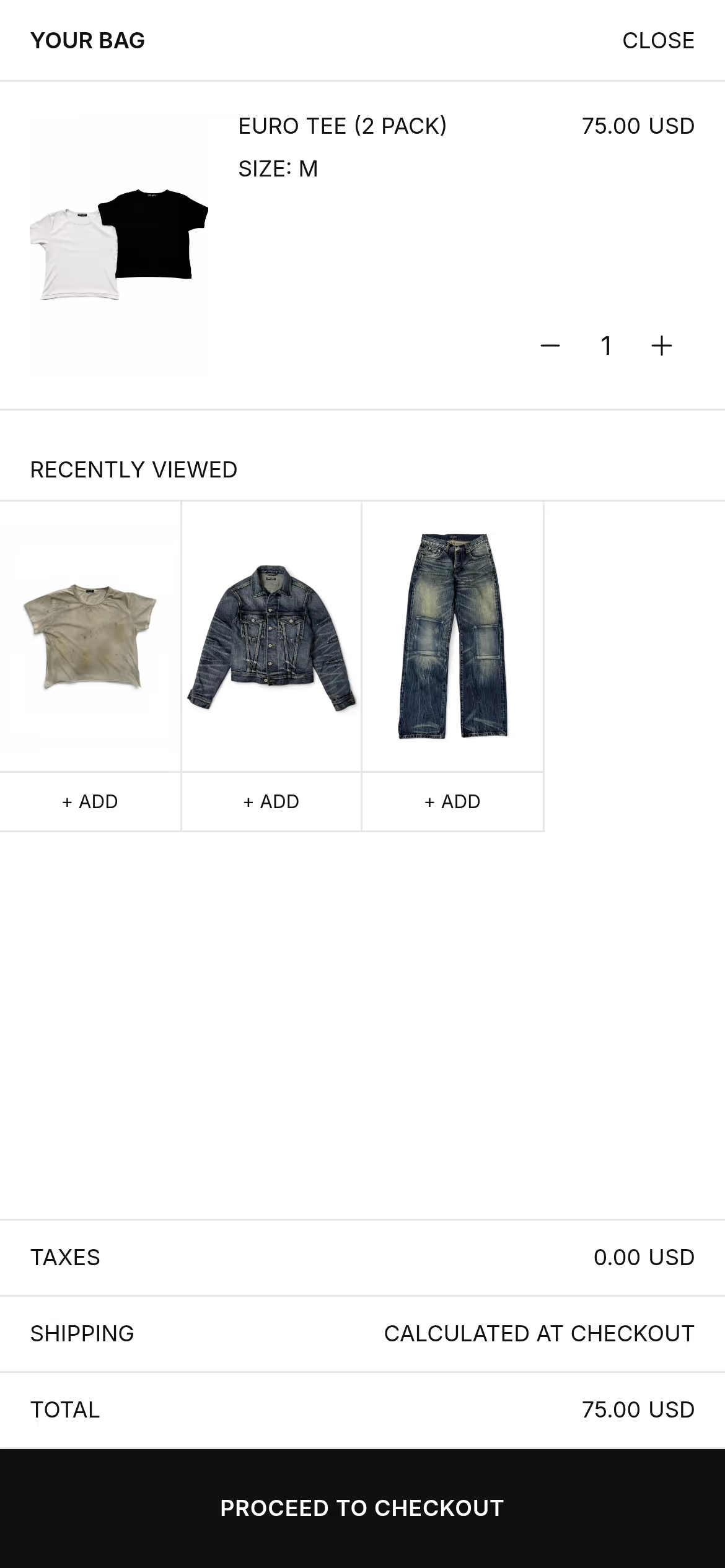
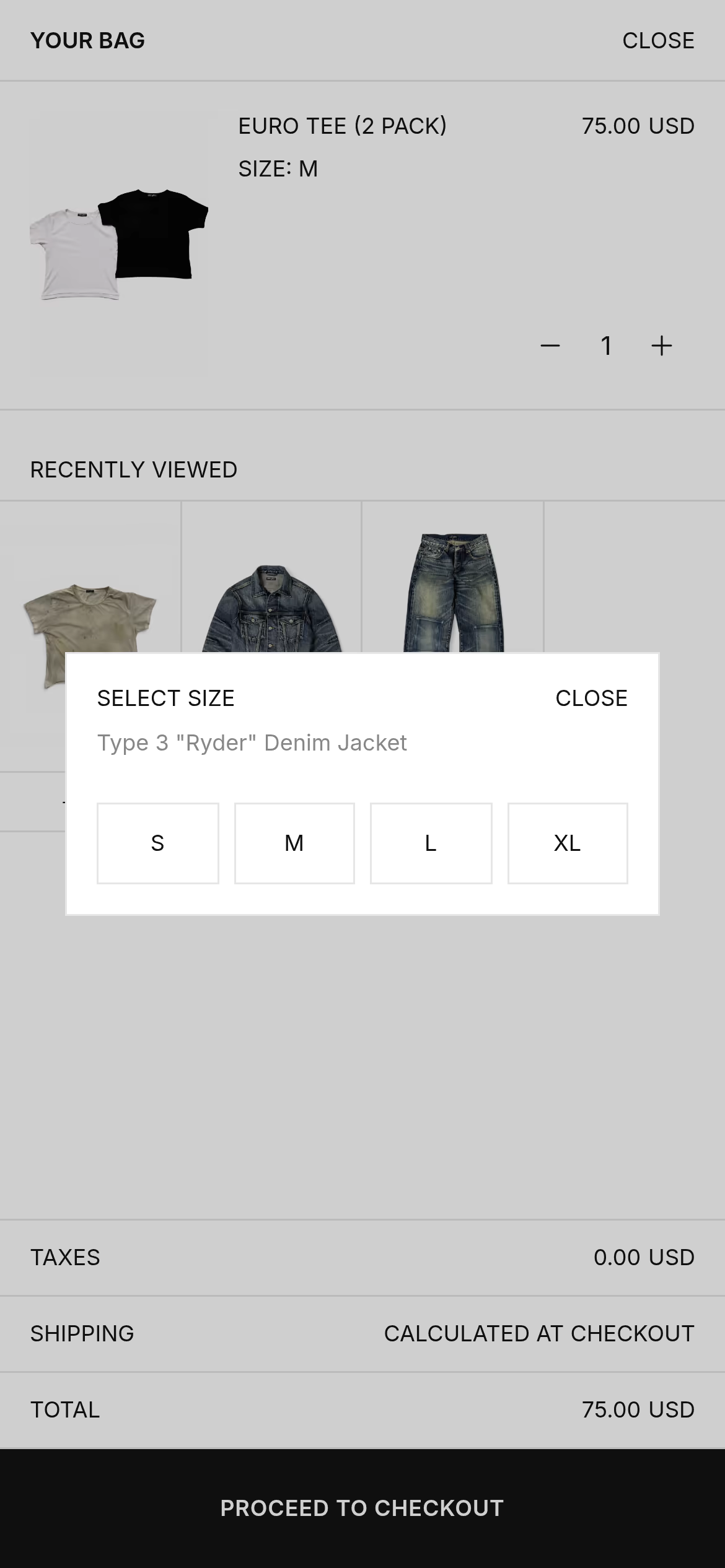
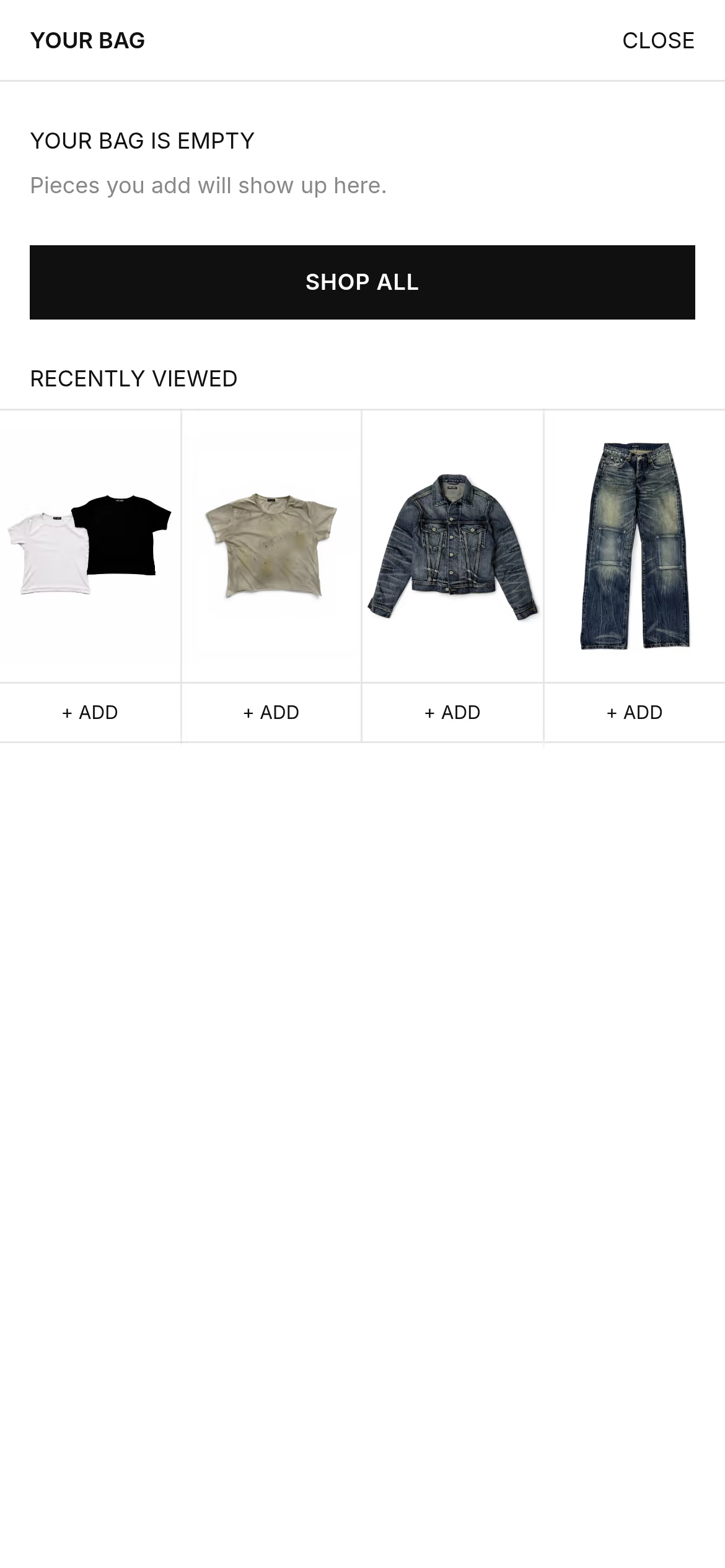
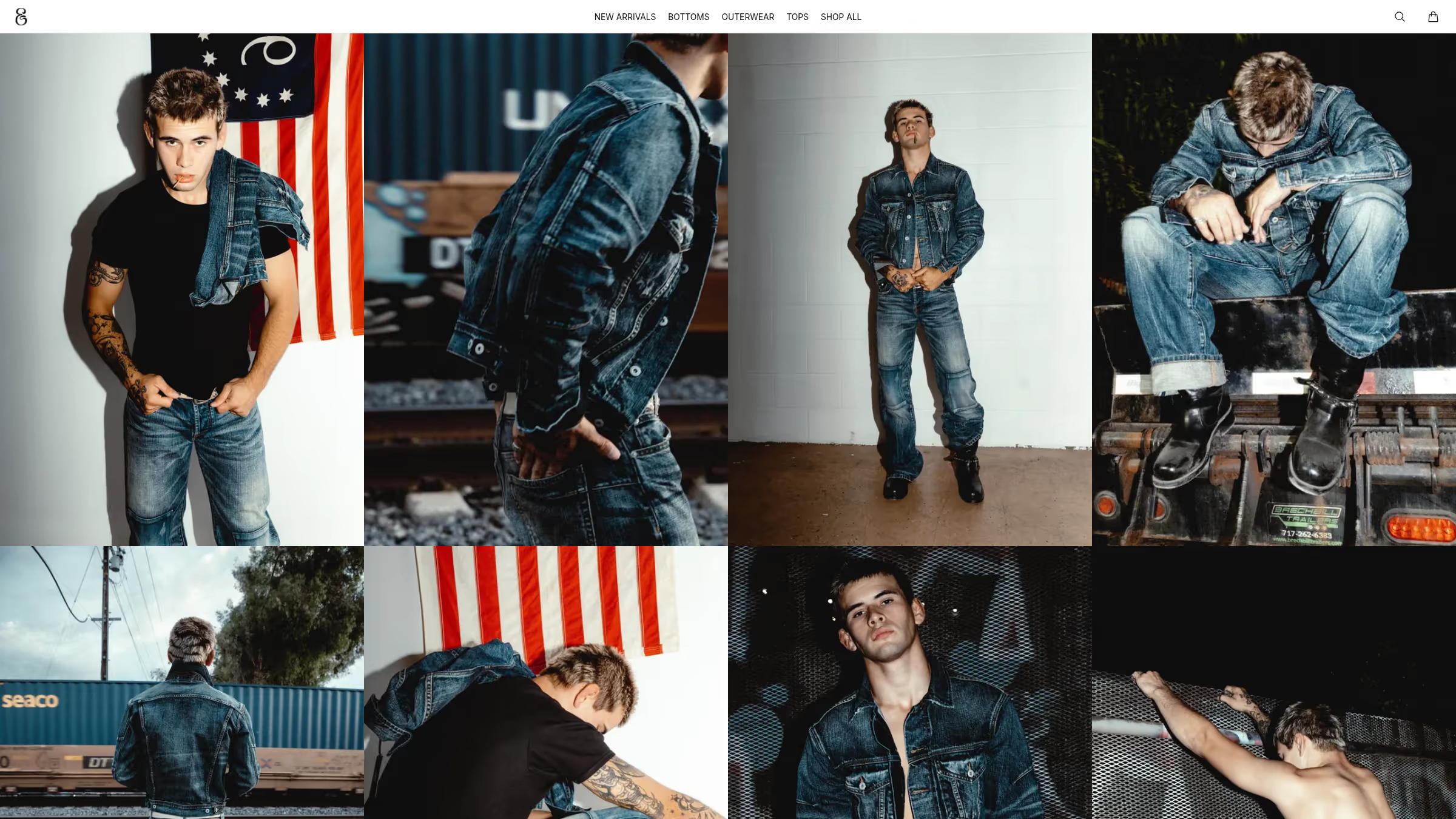
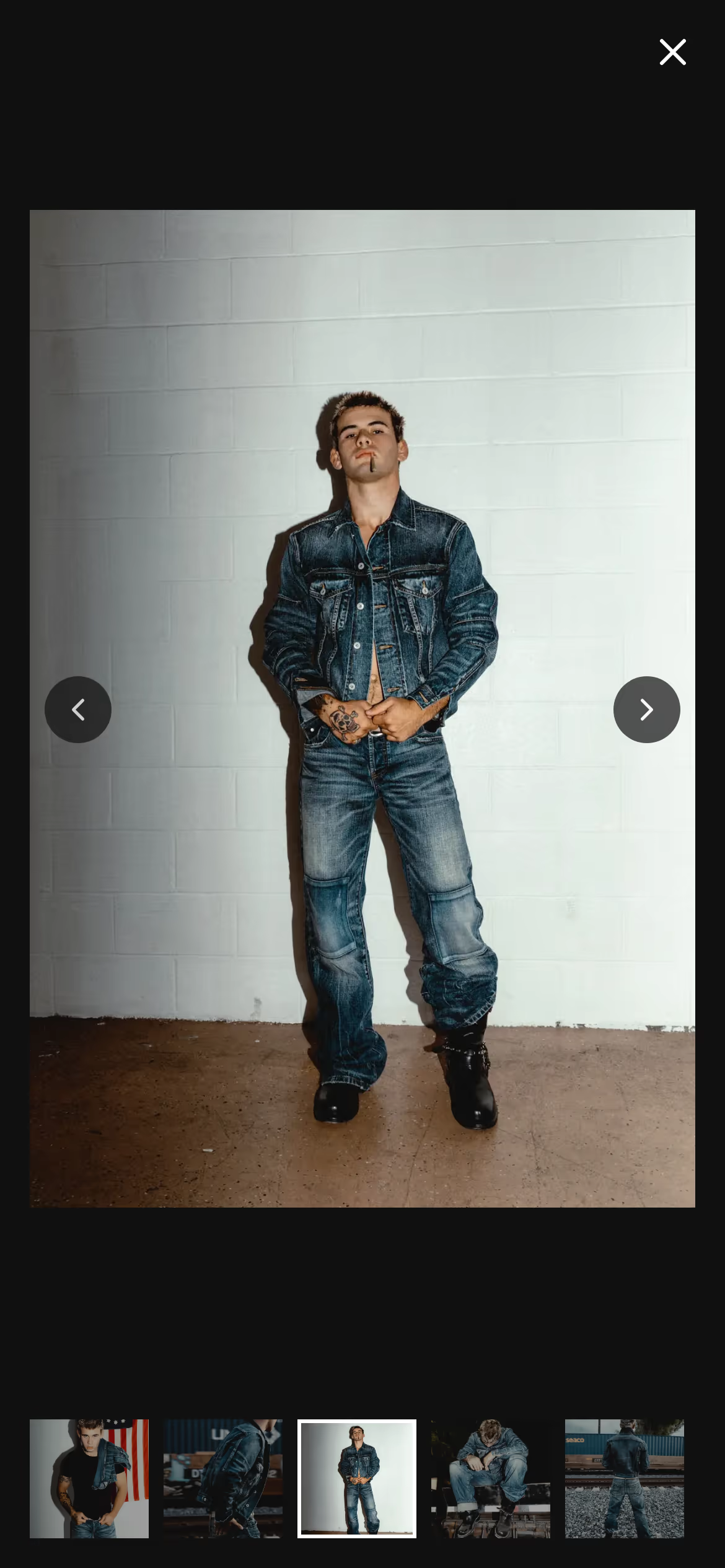
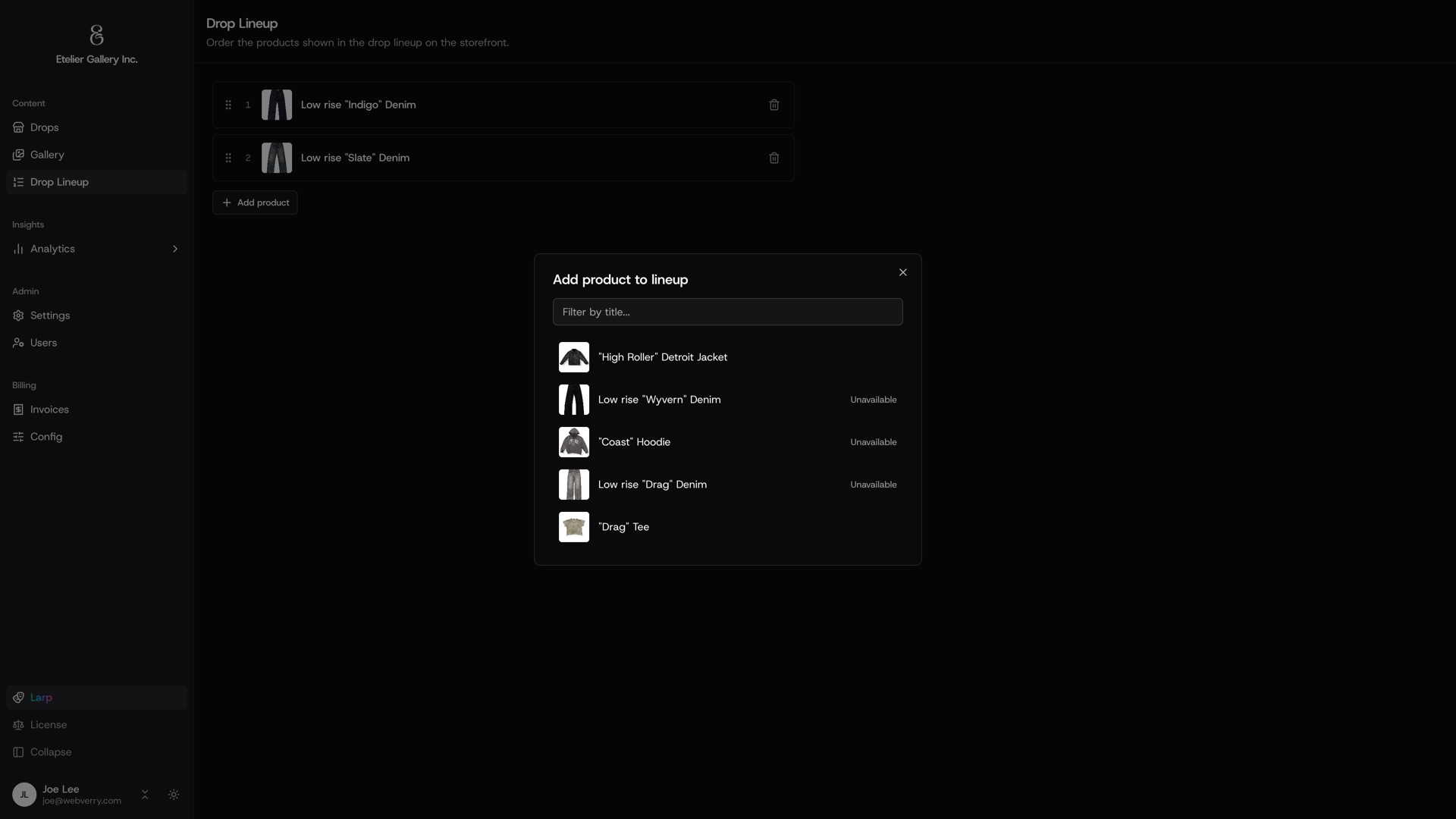
The Etelier storefront is fully decoupled. Shopify handles what it's genuinely good at: payments, inventory, order data, fulfillment. Every customer-facing surface is built to spec and maintained as custom code: the unlock screen, product pages, the editorial gallery, the cart.
The investment in decoupling isn't just aesthetic. Each future drop can introduce new unlock mechanics, new tier structures, new visual treatments, without touching the platform layer at all. The brand owns everything the customer touches. That ownership compounds.
SYSTEM ARCHITECTURE
CUSTOM LAYER: WHAT WE BUILT
UNLOCK SCREEN
4,000 particle physics: the brand communicates before a product appears
PRODUCT PAGES
Built to spec: layout, type, and image treatment owned entirely
EDITORIAL GALLERY
Full-bleed, image-first: not possible inside a Shopify theme
DROP ENGINE
Scheduled access, cron-driven, lock-by-default on any error
CUSTOMER ACCOUNTS
Order history queried directly for automatic tier assignment
DECOUPLED AT RENDER
SHOPIFY LAYER: PLATFORM HANDLES
PAYMENTS
Checkout · tax · fraud detection
INVENTORY
Stock levels · variants · SKUs
CUSTOMER DATA
Auth · profiles · addresses
ORDER HISTORY
LTV · purchase history · tier source
[ LET'S WORK TOGETHER ]
If your team is still executing launch day manually, or your storefront is hitting the ceiling of what a theme allows, this is the conversation to have before your next drop.
Book a call[ Project Gallery ]